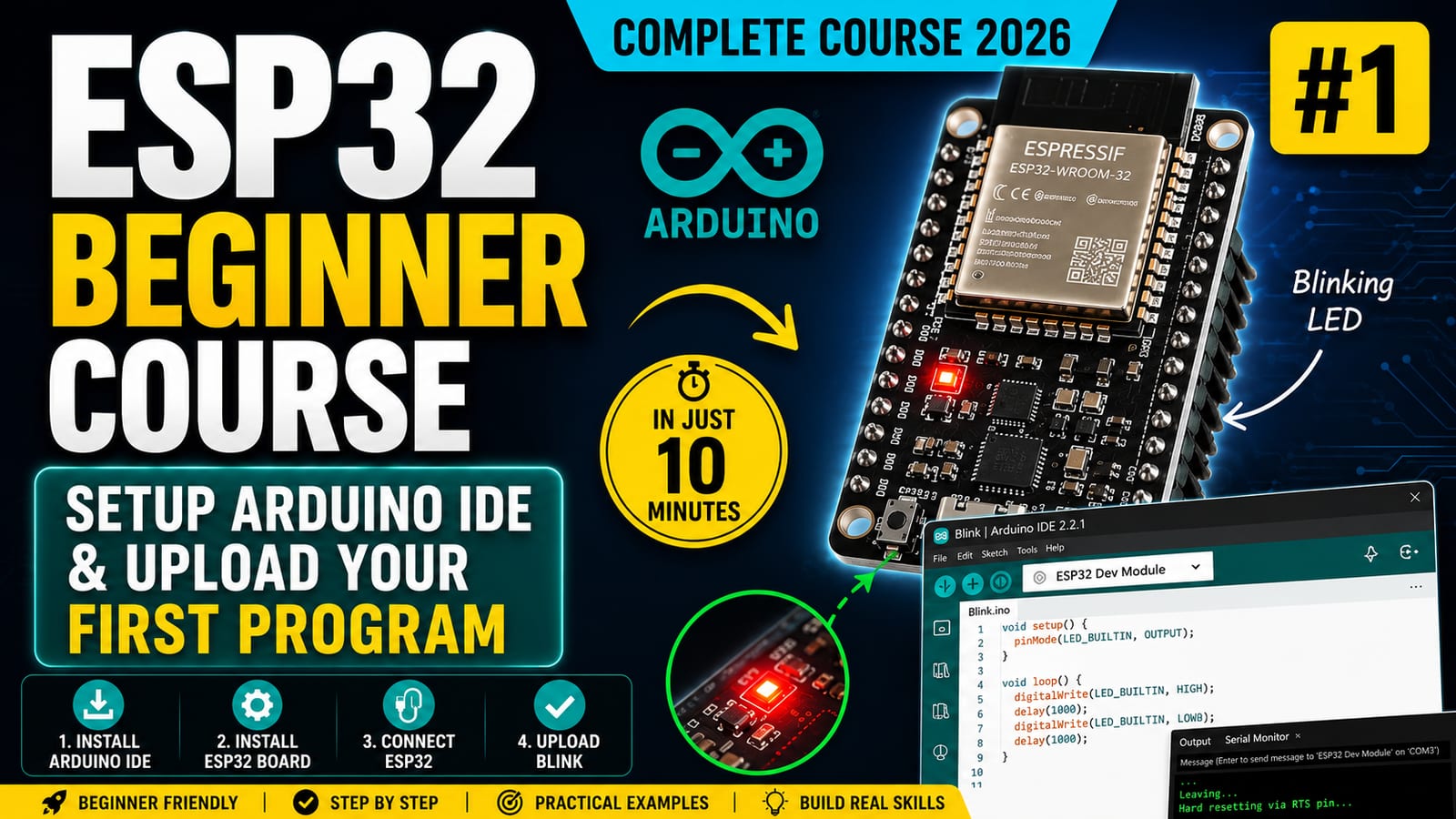
ESP32 Beginner Course #1: Set Up Arduino IDE and Upload Your First Program
Set up Arduino IDE for ESP32 development, install Espressif board support, select the correct board and port, upload Blink, and troubleshoot the first upload.
Firmware, microcontrollers, RTOS patterns, device drivers, and board-level engineering.
Set up Arduino IDE for ESP32 development, install Espressif board support, select the correct board and port, upload Blink, and troubleshoot the first upload.
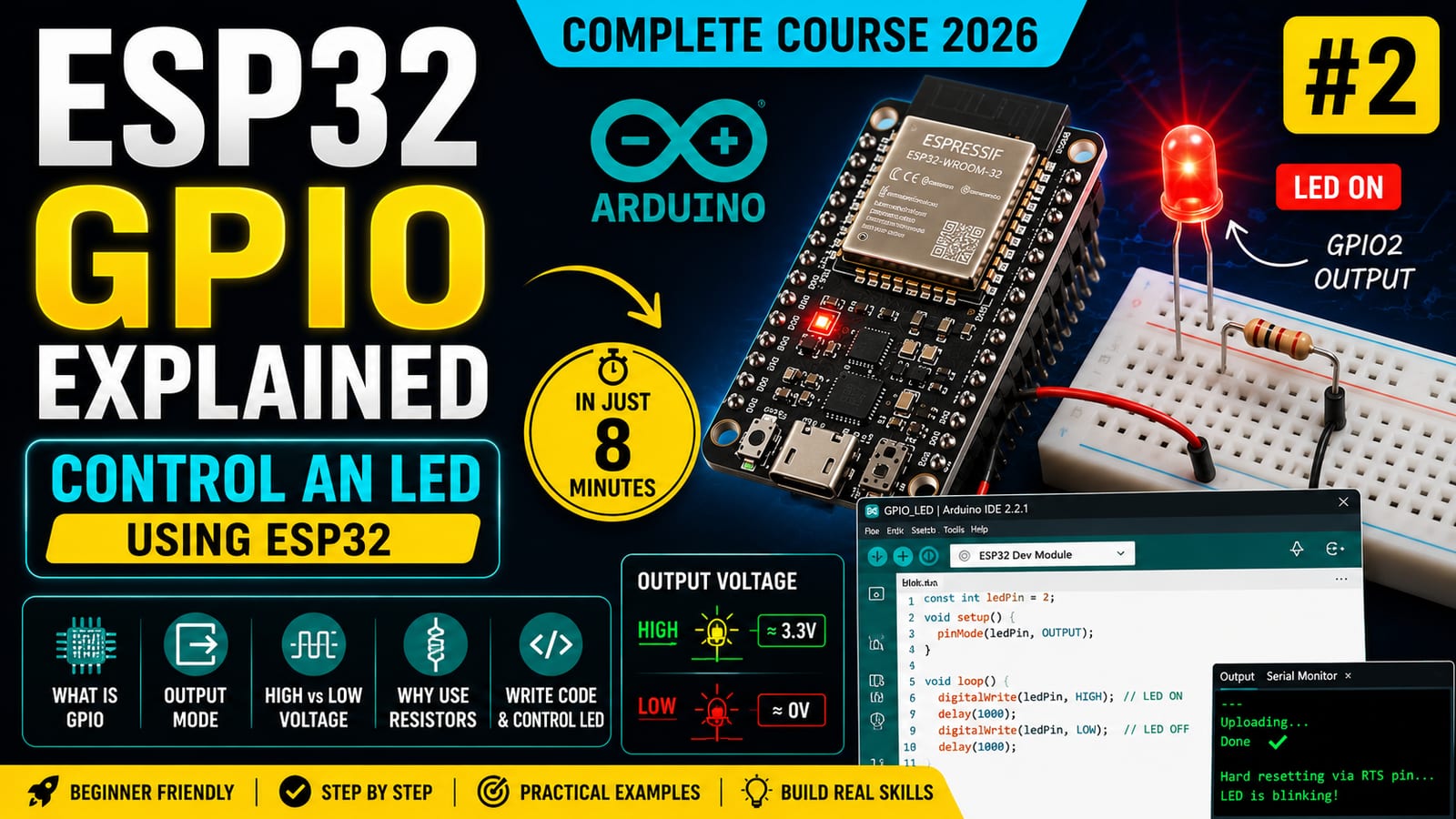
Learn how ESP32 GPIO output works by wiring an external LED, using HIGH and LOW signals, adding a current-limiting resistor, and writing digital output code.
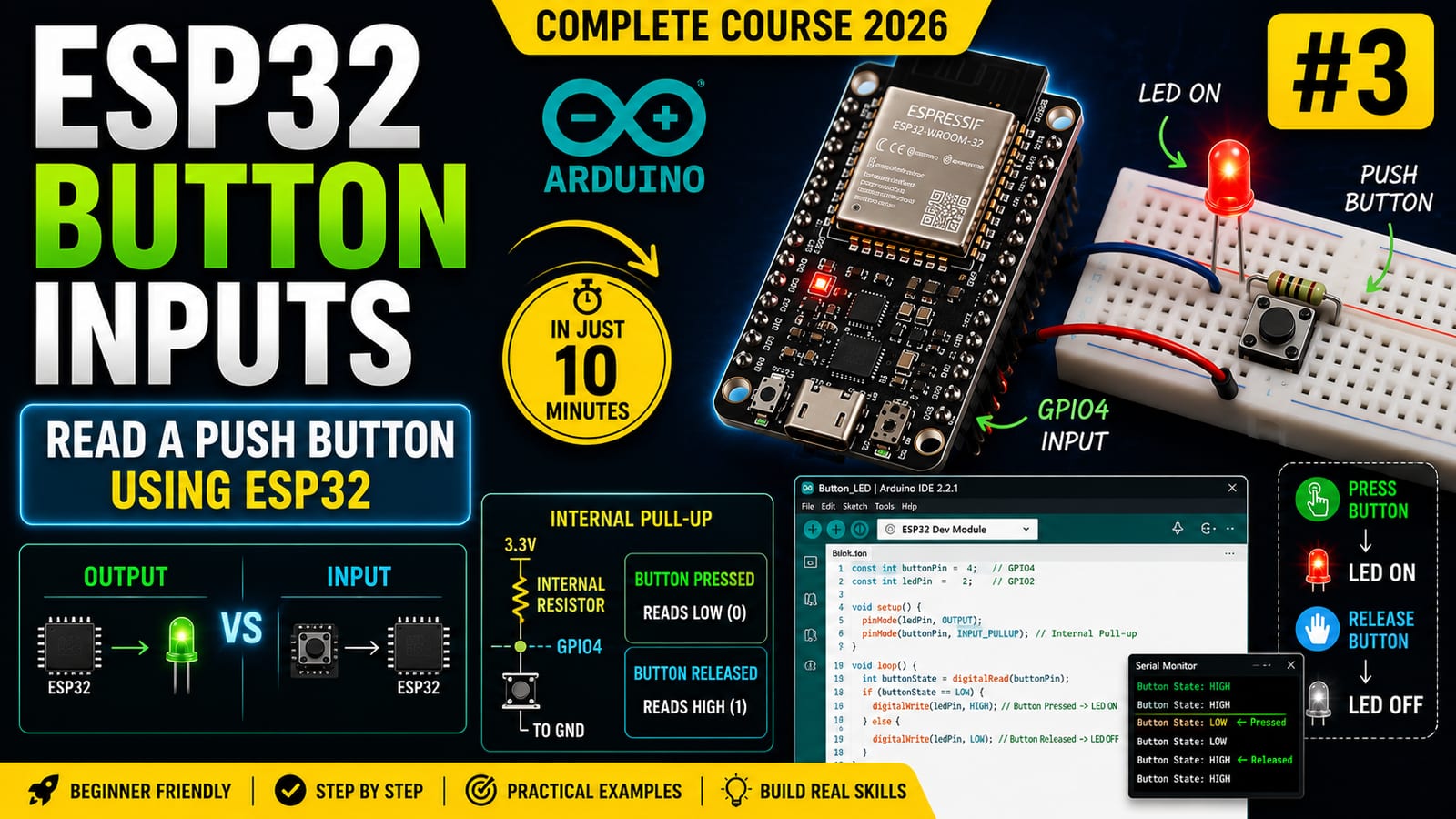
Read a push button with ESP32 GPIO4, understand floating inputs, pull-up and pull-down resistors, and control an LED using digitalRead.
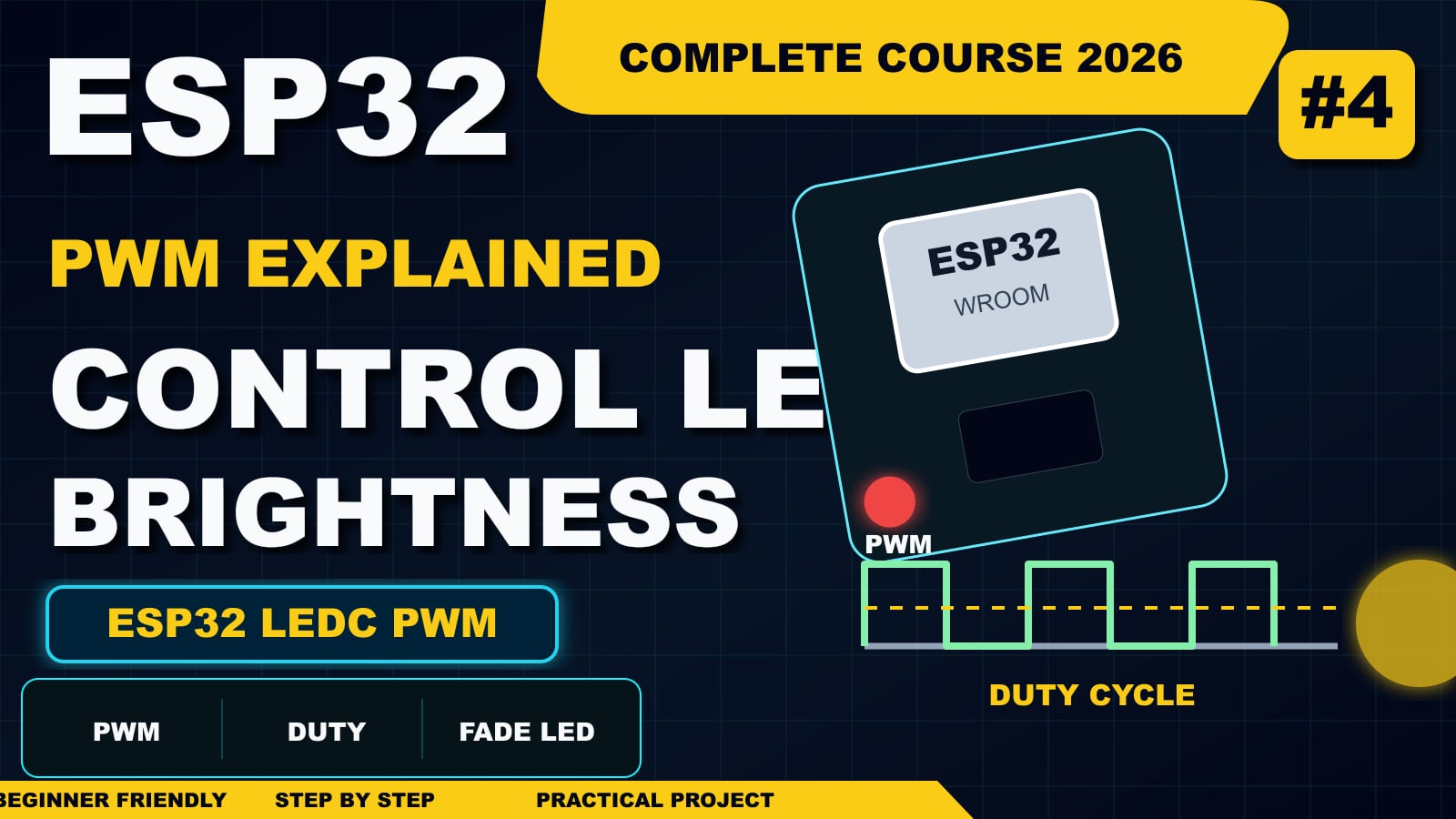
Learn PWM on the ESP32 using LEDC, duty cycle, frequency, 8-bit resolution, and a fading LED brightness example.
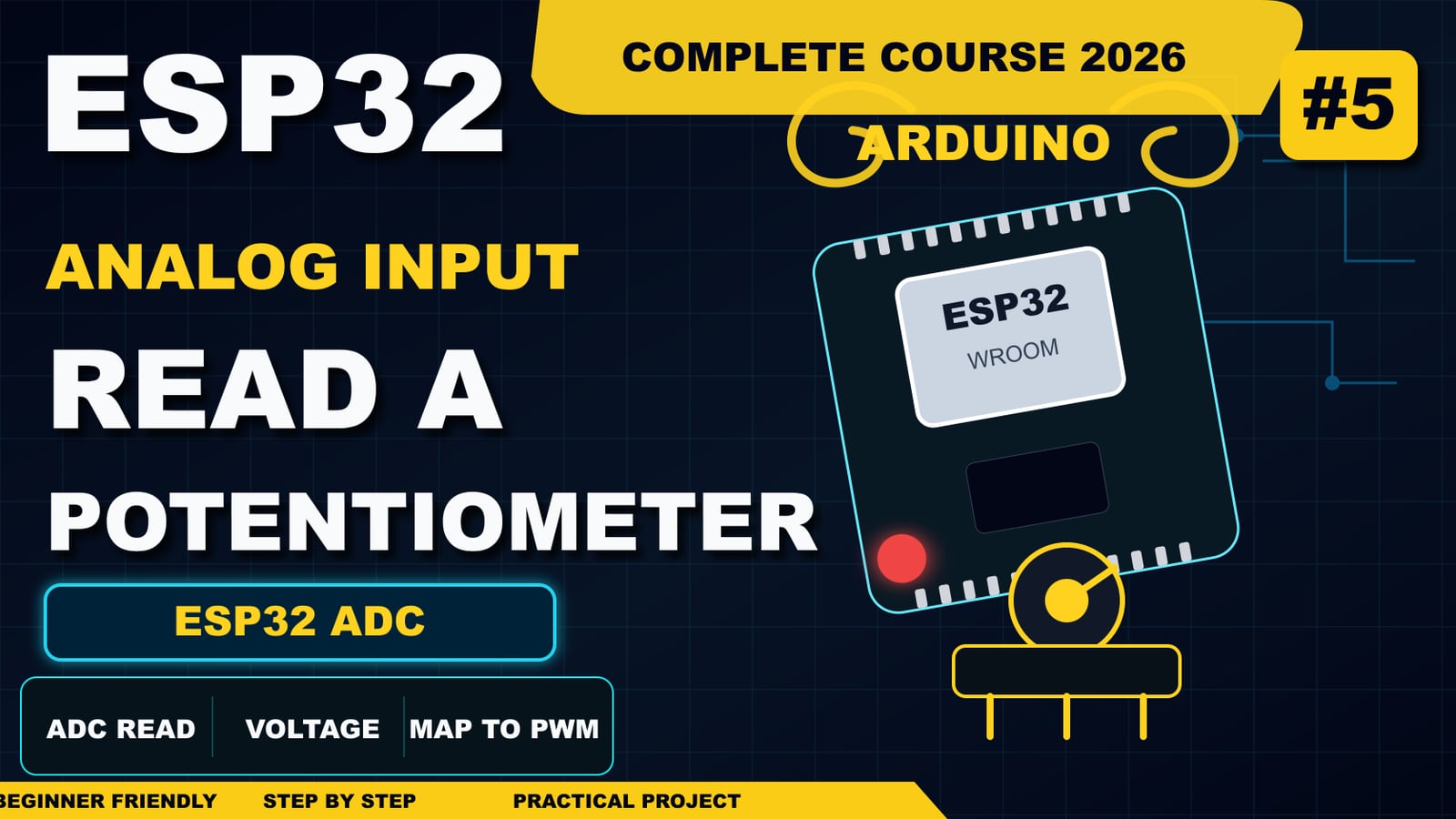
Learn how ESP32 analog input works by reading a potentiometer with the ADC, converting raw values to voltage, and using the knob to control LED brightness.
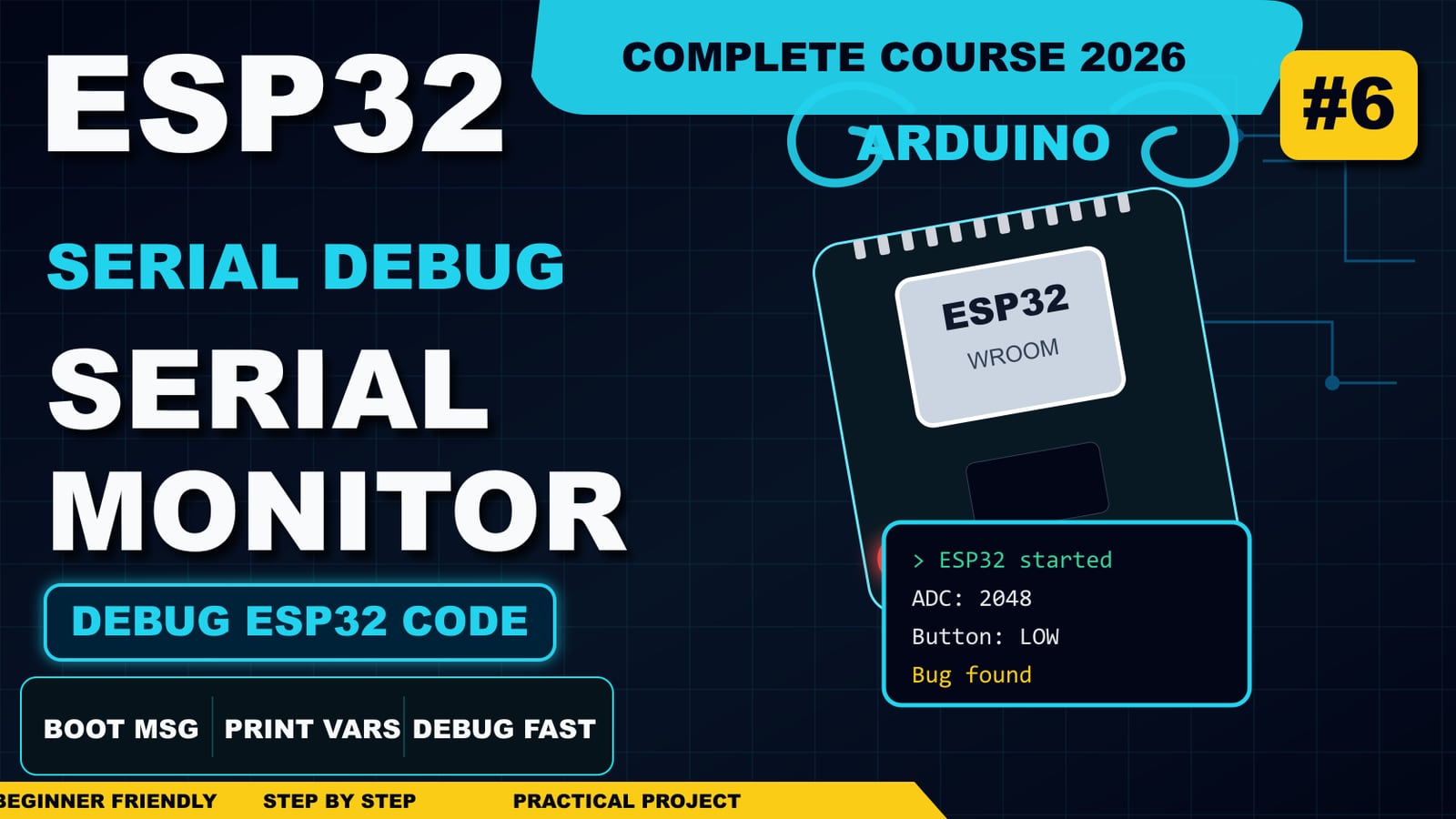
Learn how to debug ESP32 projects using Serial Monitor, print variable values, inspect button and sensor readings, and solve common baud rate and wiring problems.
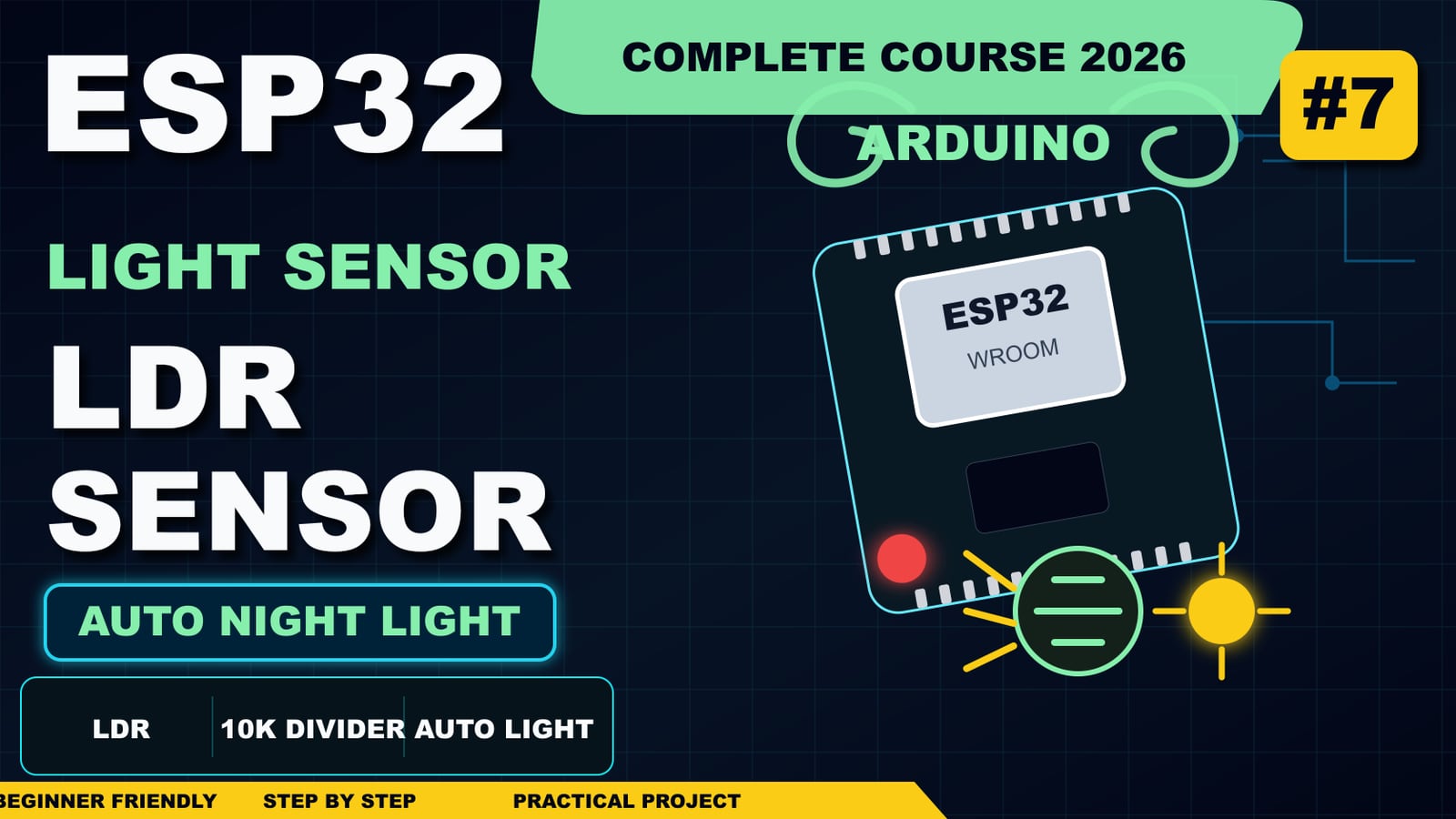
Read an LDR photoresistor with the ESP32 ADC, understand voltage dividers, calibrate a threshold, and build an automatic night light.
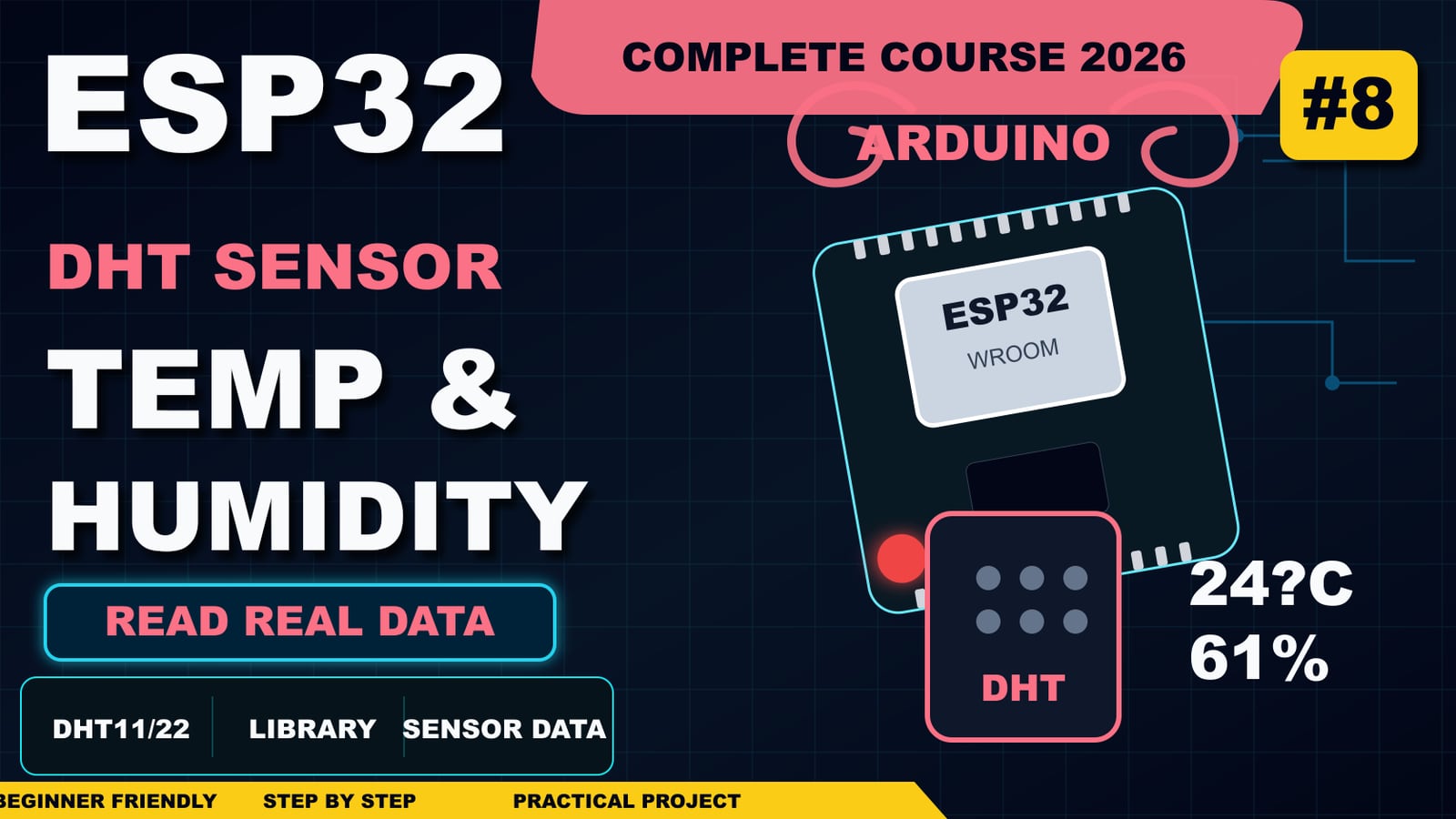
Connect a DHT11 or DHT22 sensor to the ESP32, install the Arduino library, read temperature and humidity, and handle failed readings.
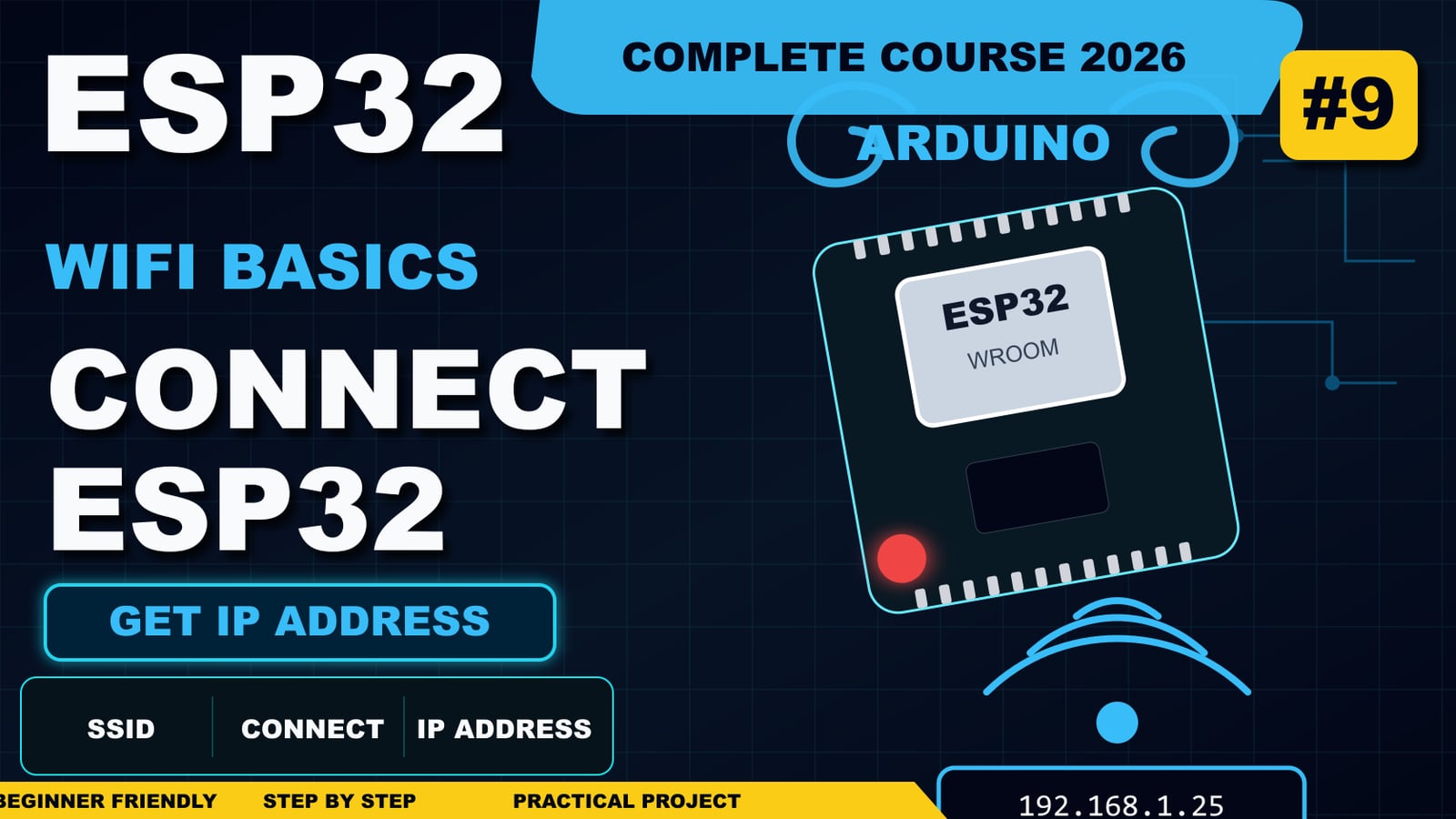
Connect the ESP32 to a WiFi network, understand SSID and password settings, print connection status, use reconnect logic, and find the board IP address.
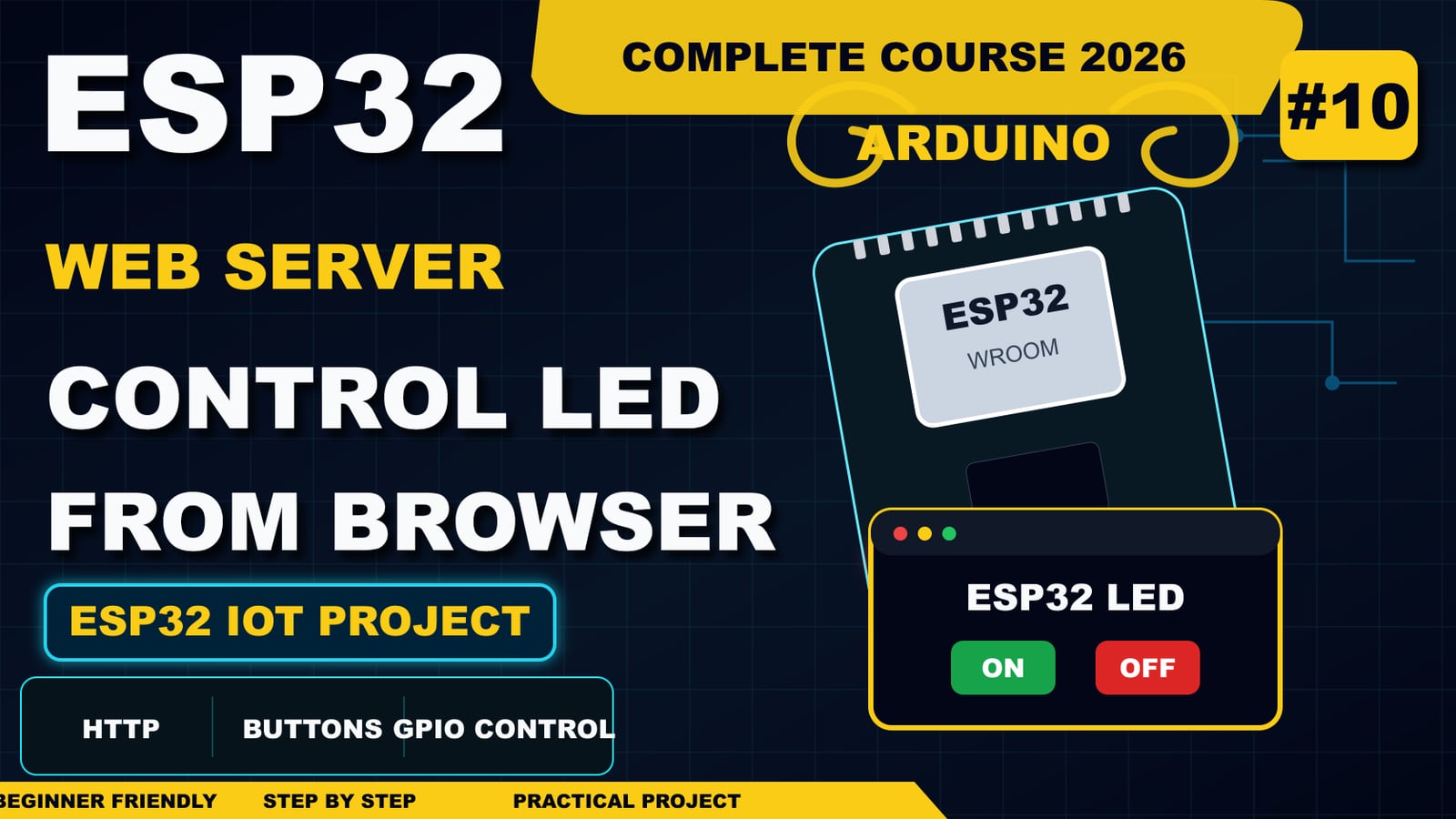
Build a simple ESP32 web server, serve an HTML control page, and turn an LED on and off from a browser over WiFi.
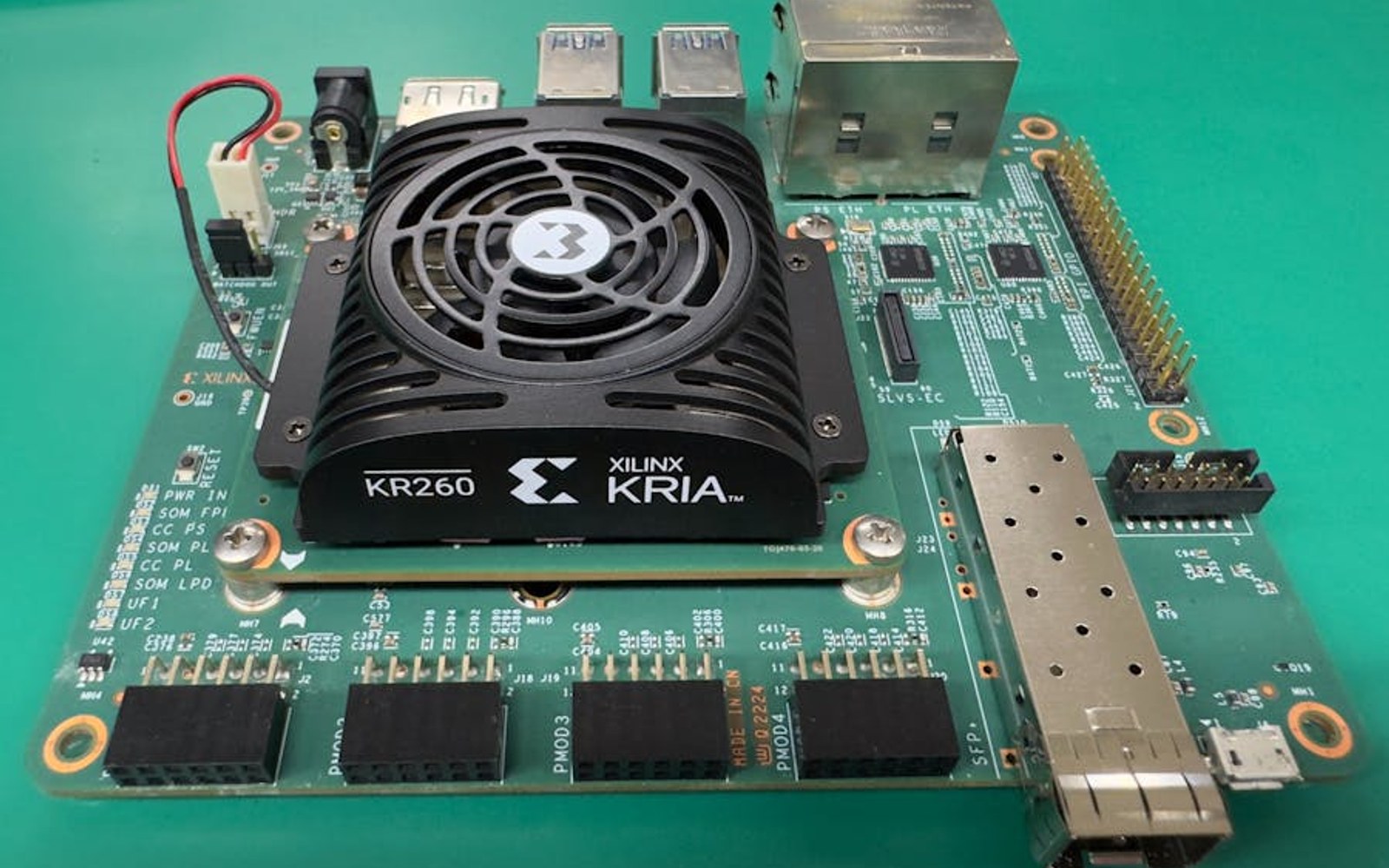
A practical guide to preparing a Linux host, creating a KR260 project from the matching BSP, customizing PetaLinux, building the SDK and boot image, and starting the target board.
A practical firmware structure for STM32 systems that need reliable drivers, diagnostics, communication layers, and long-term maintainability.
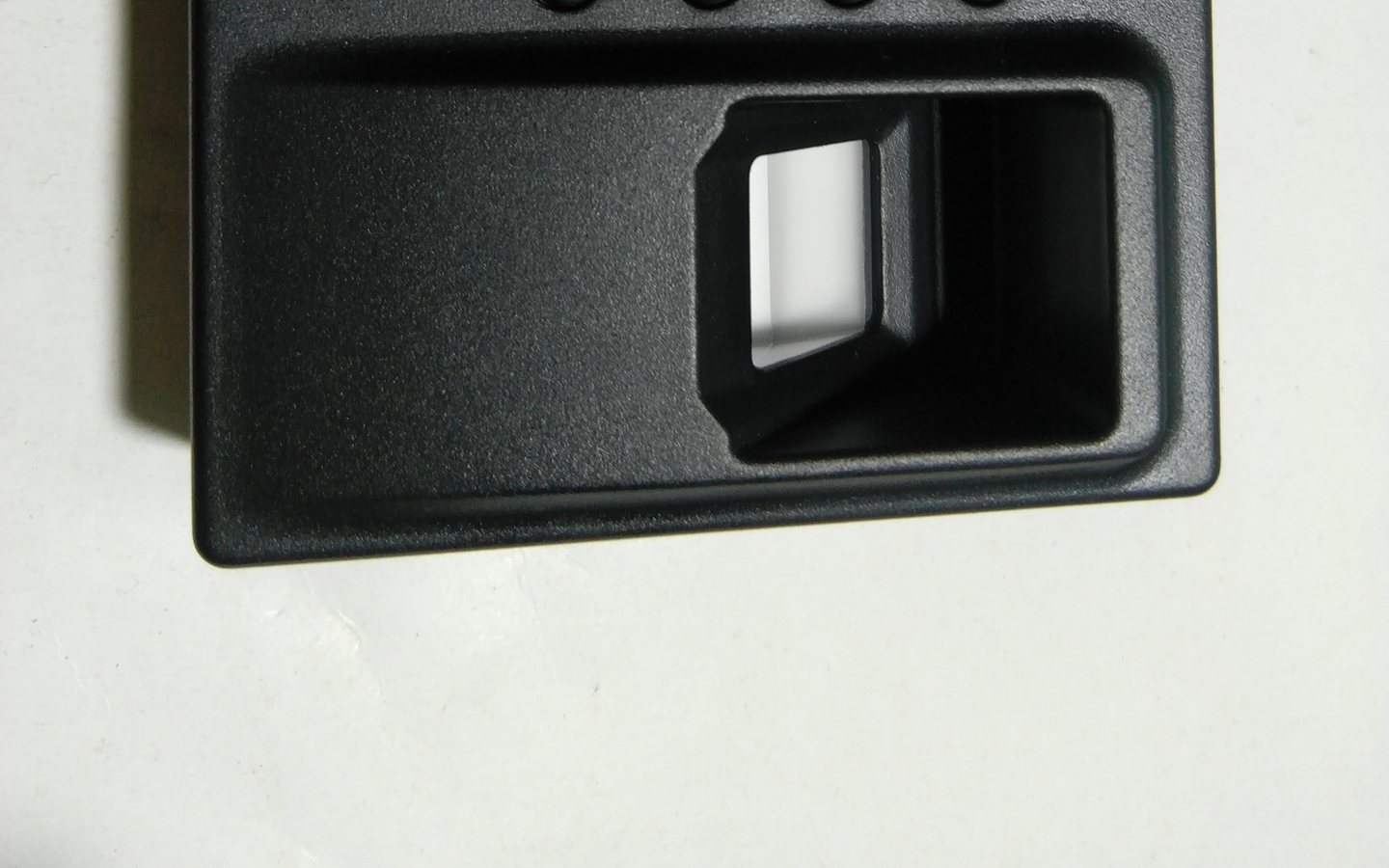
A compact fingerprint and keypad terminal intended for identity, attendance, or controlled-entry workflows.
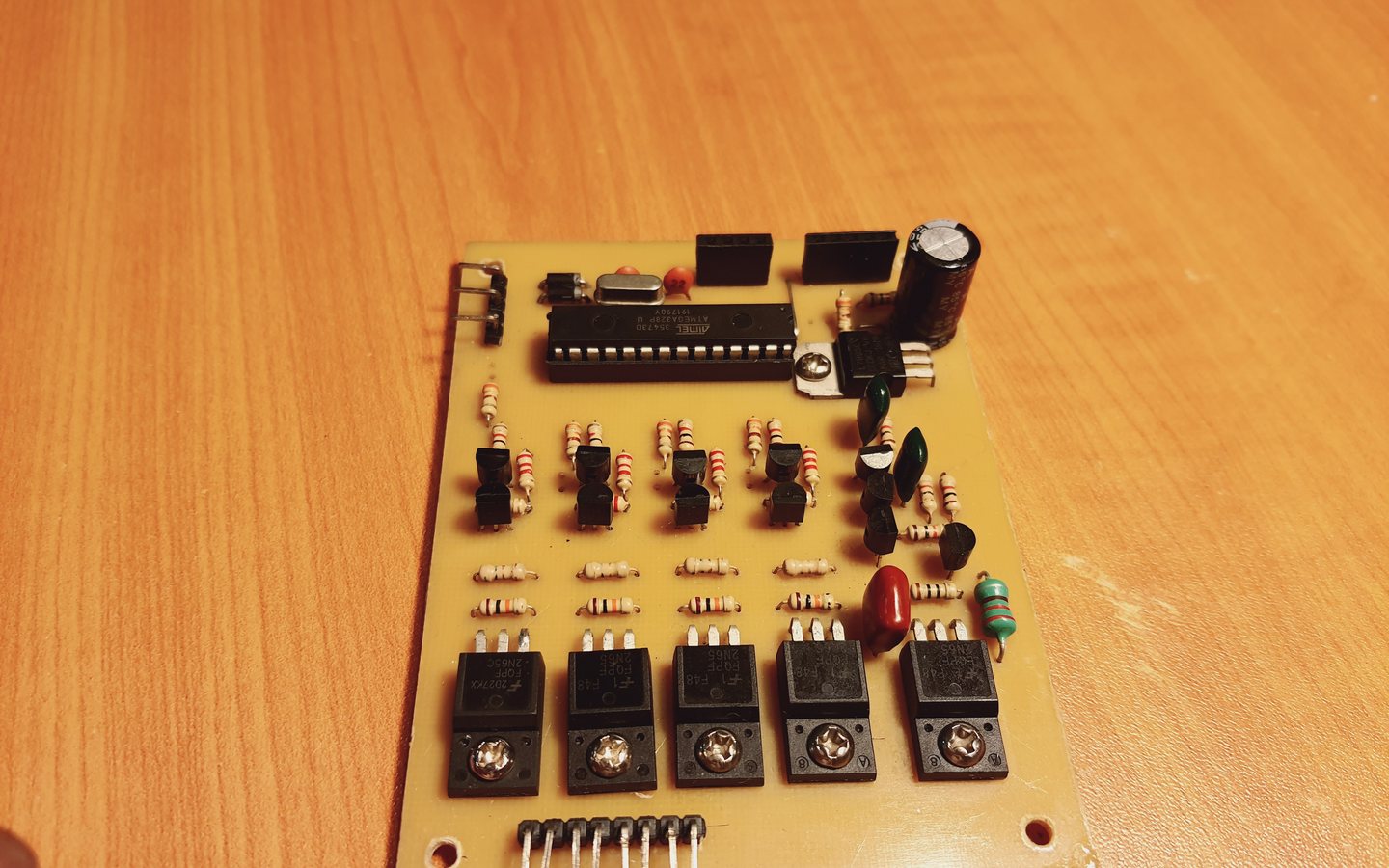
An ATmega328P-based controller for independently driving four mist-maker channels.
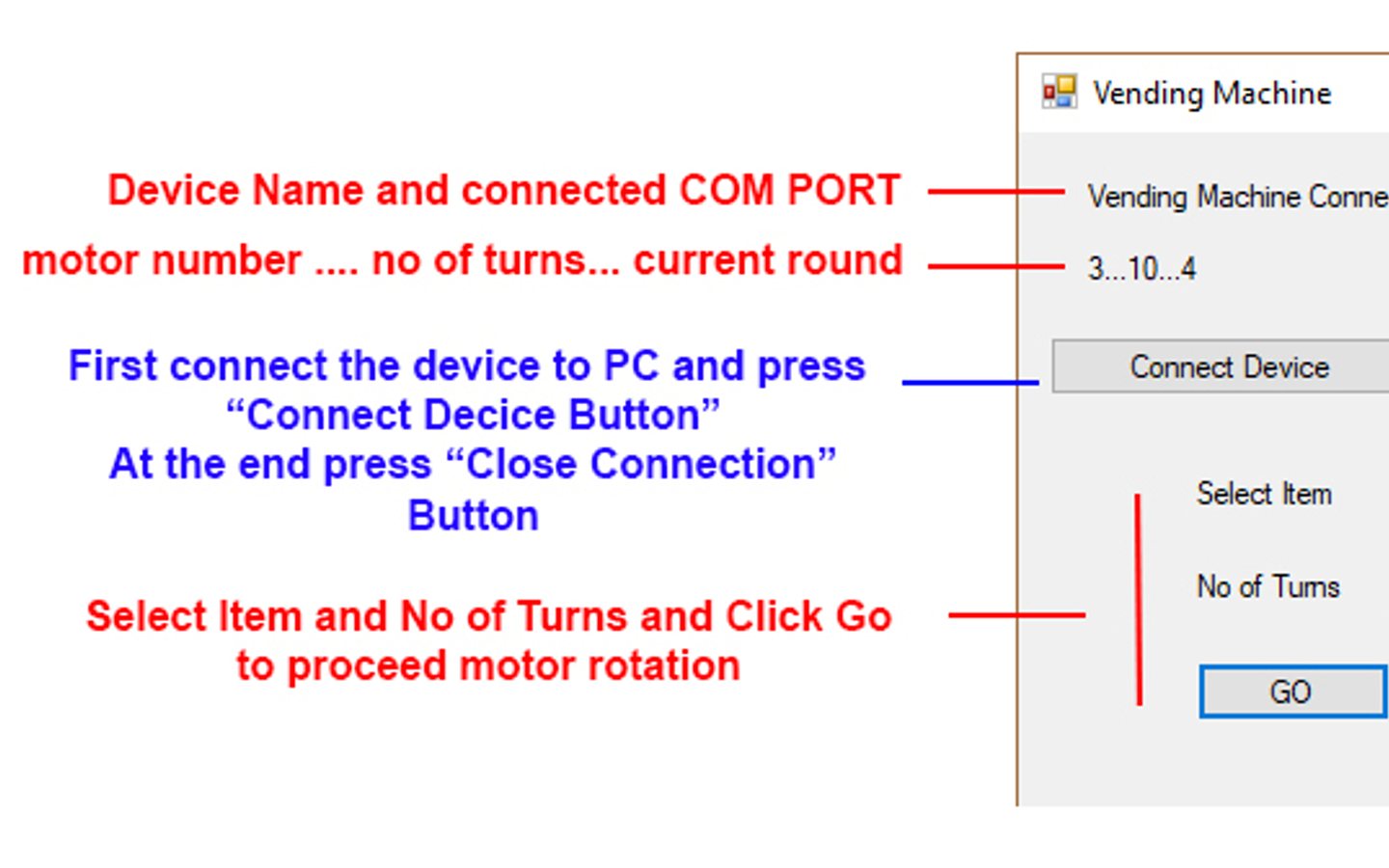
A packaged controller for driving three vending-machine motors with sensor feedback and PC-based configuration.